
How Much Does a WordPress Website Cost in 2026? (Full Price Guide)
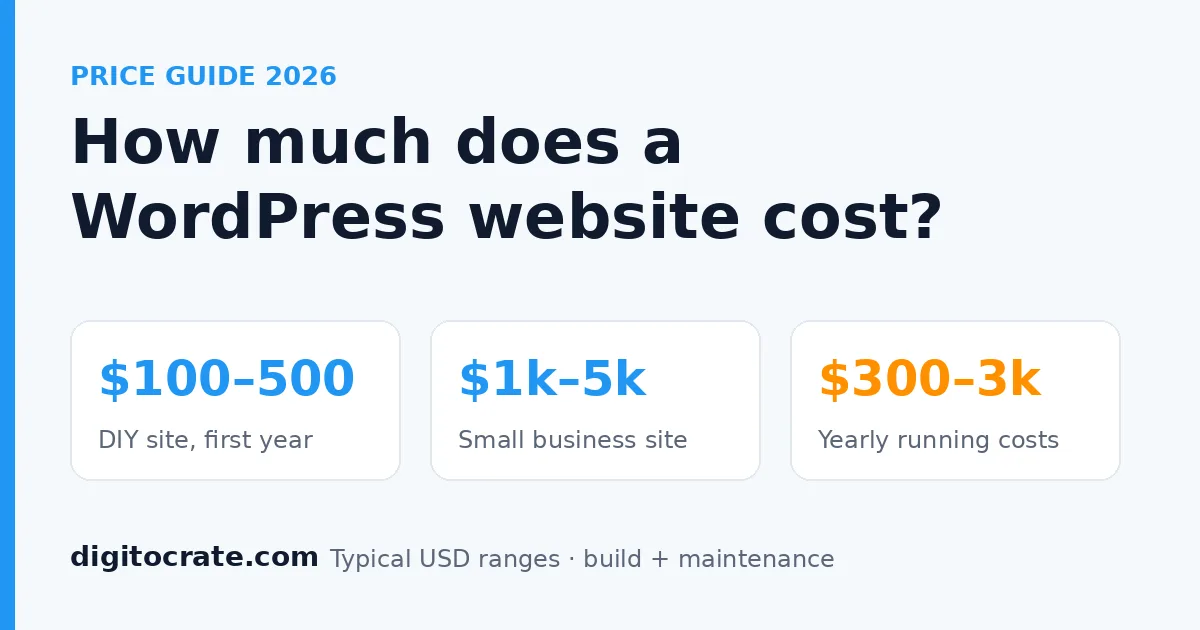
"How much does a WordPress website cost?" is one of the first questions every business owner asks — and the answers online range from $0 to $50,000. This guide breaks the cost into clear parts, shows typical price ranges in US dollars for 2026, and explains the running costs most quotes leave out.
Quick answer
- DIY website with a ready-made theme: about $100–$500 in the first year (domain, hosting, premium theme and a few plugins).
- Small business website built by a freelancer or agency (5–15 pages): typically $1,000–$5,000.
- Custom-designed business or law-firm website (15–50 pages, SEO set-up): typically $3,000–$12,000.
- WooCommerce store: typically $3,000–$20,000+, depending on products, payments and integrations.
- Running costs every year: roughly $300–$3,000 for hosting, plugin licences and maintenance.
These are typical market ranges, not fixed prices. Where you are, who builds the site and how much custom work you need all change the number.
1. One-time costs: building the website
Domain name — $10–$20 a year
A .com usually costs $10–$20 a year. Country domains such as .co.uk, .com.au or .ae cost about the same. Premium names that are already owned can cost far more.
Theme — $0–$100 (or custom design)
Free themes are fine for simple sites. Premium themes cost $50–$100 once. A custom design made for your brand is usually part of the agency fee and is the biggest driver of a higher quote.
Design and development — $500–$15,000+
This is where most of the money goes. What affects the price:
- Number of unique page layouts, not just the number of pages.
- Custom features — booking, quote calculators, member areas, multilingual content.
- Content — will you supply the text and photos, or does the agency write and source them?
- SEO set-up — page titles, structured data, redirects from an old site, speed work.
- Who builds it — freelancers usually charge less than agencies; rates also vary a lot by country.
Content writing — $50–$300 per page
Good service pages and articles sell your business and help you rank. Many projects underestimate this cost, then launch with thin pages that never appear on Google.
2. Running costs: what you pay every year
| Item | Typical yearly cost |
|---|---|
| Domain renewal | $10–$20 |
| Hosting (shared to managed WordPress) | $60–$600 |
| Premium plugin licences (forms, SEO, backups, page builder) | $100–$500 |
| SSL certificate | Usually free with your host |
| Maintenance (updates, backups, security) | $0 if you do it yourself, $600–$2,400 with a care plan |
The hidden cost of WordPress is time and risk. Plugins need updating every week, and an outdated plugin is the most common way WordPress sites get hacked. A hack clean-up usually costs $150–$500, plus the enquiries you lose while the site is down.
3. Example budgets
Local service business — about $2,500 to launch, $900 a year
Eight pages (home, about, four services, contact, blog), a premium theme customised to the brand, contact forms, basic SEO and Google Business Profile links. Running costs: hosting, plugin licences and an entry-level maintenance plan.
Law firm with city pages — about $6,000 to launch, $1,500 a year
Twenty-five to forty pages: practice areas, city landing pages, lawyer profiles, LegalService and FAQ structured data, and carefully written content. Running costs include a business maintenance plan with daily backups and a firewall.
4. How to keep the cost down without cutting corners
- Use a quality theme and customise it, instead of a fully custom design, for your first version.
- Prepare your text, logo and photos before the project starts — waiting for content is the most common cause of delays and extra fees.
- Avoid installing a plugin for every small feature. Fewer plugins mean a faster site, fewer conflicts and lower risk.
- Budget for maintenance from day one. It is cheaper than fixing a hacked or broken site.
5. WordPress or Next.js: which costs less over time?
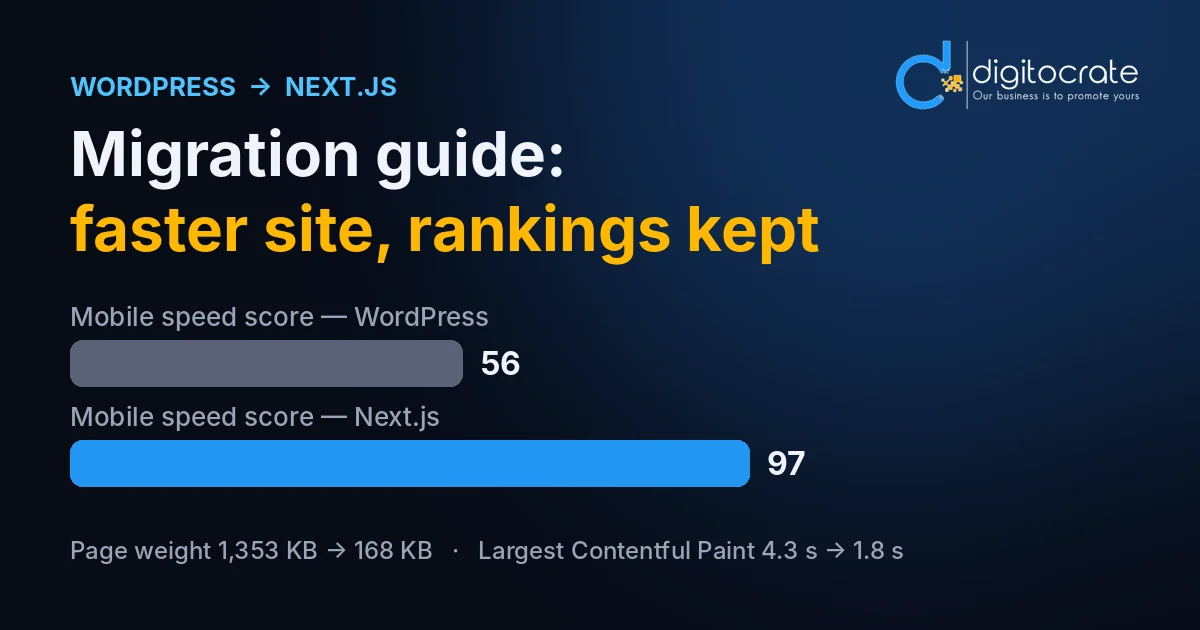
A WordPress site is often cheaper to start. A Next.js site can be cheaper to run: there are no plugin licences, no plugin updates and far fewer security risks, and hosting on a platform such as Vercel is free or low-cost for most business websites. It is also much faster — when we moved our own site from WordPress to Next.js, the mobile speed score went from 56 to 97.
The trade-off: editing usually needs a developer or a simple content system, so Next.js suits businesses whose pages do not change every day. Read our WordPress to Next.js migration guide to see whether it fits you.
Our prices
- WordPress maintenance plans — from $49 a month.
- Hacked WordPress repair — fixed price from $149.
- New WordPress or Next.js websites and WordPress to Next.js migration — fixed quote after a free audit.
Not sure what your project should cost? Send us your website or your idea and we will give you a clear, fixed quote.